Breaking News




Popular News





Enter your email address below and subscribe to our newsletter
 By Mohit Kumar Nirwan
The essence of Raksha Bandhan lies in its simple yet deeply meaningful rituals:
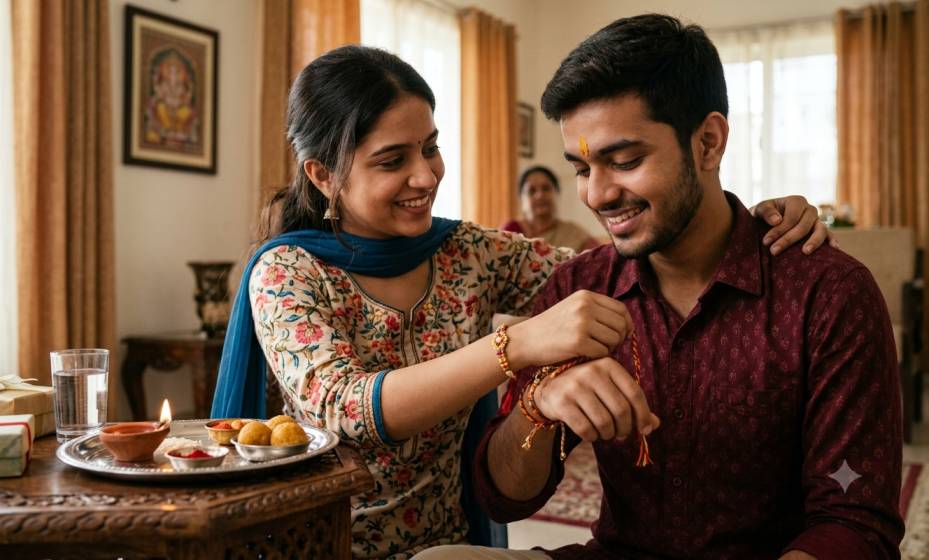
Tying the Sacred Thread: The festival begins with sisters performing an aarti for their brothers, applying a tilak of vermilion and rice to their foreheads, and tying a rakhi—a sacred thread—around their right wrists. The thread symbolizes a prayer for the brother’s health, prosperity, and longevity.
The Vow of Protection: In return, the brother offers gifts, sweets, and a sacred promise to protect his sister from harm and stand by her through life's challenges.
Exchange of Sweets: Families share traditional sweets like laddoo, kaju katli, and kheer, marking the sweetness of sibling relationships.
The cultural significance of Raksha Bandhan is enriched by numerous historical accounts and mythological legends:
Krishna and Draupadi: According to legend, when Lord Krishna cut his finger while using his Sudarshana Chakra, Draupadi immediately tore a strip from her silk saree and tied it around his wound. Touched by her gesture, Krishna promised to protect her honor whenever needed—a promise he famously kept during her direst hour.
Queen Karnavati and Emperor Humayun: Historical lore tells of Queen Karnavati of Mewar, who sent a Rakhi to the Mughal Emperor Humayun seeking protection for her kingdom against invasion. Moved by the gesture, Humayun set off with his troops to aid her, highlighting how the festival can unite people across different faiths and kingdoms.
Goddess Lakshmi and King Bali: Another myth recounts Goddess Lakshmi tying a cotton thread around the wrist of King Bali, securing the release of her husband, Lord Vishnu, from Bali's realm through her blessing.
While the traditional essence remains intact, the celebration of Raksha Bandhan has evolved with changing times:
Inclusivity Beyond Siblings: Today, the tying of a Rakhi is no longer strictly confined to biological brothers and sisters. People tie Rakhis to close friends, cousins, sister-in-laws (Lumba Rakhi), and even community figures like soldiers, emergency responders, and police officers to honor their service and protection.
Distance and Digital Celebrations: With families spread across the globe, digital Rakhis, online gift deliveries, and virtual celebrations ensure that physical distance does not weaken sibling ties.
Eco-Friendly Innovations: Modern Rakhis increasingly feature eco-friendly designs made from organic cotton, seeds that can be planted after the festival, and sustainable wooden elements, reflecting growing environmental awareness.
At its core, Raksha Bandhan is a celebration of unconditional love and mutual duty. It serves as an annual reminder that no matter how fast-paced life becomes, the sacred threads of family and connection remain unbreakable.