Breaking News




Popular News





Enter your email address below and subscribe to our newsletter
 By Prerna sablok
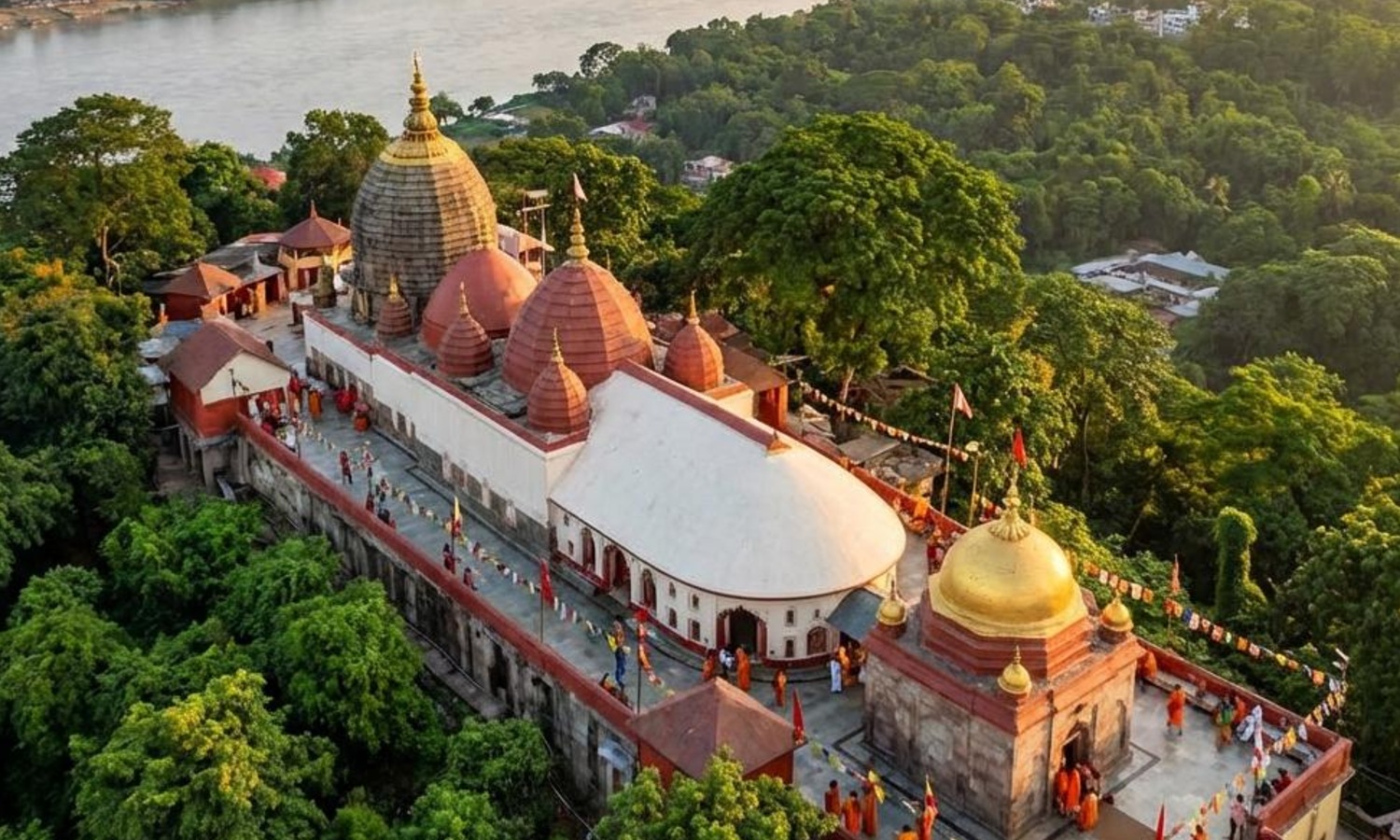
High on the Nilachal Hill in Guwahati, Assam, stands a temple unlike many others in India. There is no traditional idol of a goddess at its centre. Instead, devotees worship a naturally sacred stone form associated with the feminine creative energy.
This is the temple of Maa Kamakhya Devi, one of India's most revered Shakti shrines and an important centre of spiritual and tantric traditions.
For centuries, the temple has attracted pilgrims, spiritual seekers and visitors who come not only to pray, but also to experience a place where mythology, nature, history and the idea of feminine power come together.
The Legend Behind Maa Kamakhya
The story of Kamakhya is closely connected with the legend of Goddess Sati and Lord Shiva.
According to Hindu tradition, Sati, the daughter of King Daksha, married Lord Shiva against her father's wishes. Daksha later organised a grand yajna but deliberately did not invite Sati and Shiva.
Sati nevertheless went to the ceremony. When Daksha insulted Shiva, Sati was deeply hurt and gave up her life in the sacrificial fire.
Overcome with grief, Shiva carried Sati's body and began his destructive cosmic dance. According to the traditional story, Lord Vishnu used his Sudarshan Chakra to divide Sati's body into different parts so that Shiva's grief would not destroy the universe.
The places where these parts were believed to have fallen became sacred Shakti Peethas.
At Kamakhya, tradition associates the site with Sati's yoni, symbolising feminine creative energy and fertility. This is one of the reasons the shrine holds such a distinctive place in Shakta traditions.
A Temple Without a Conventional Idol
One of the most fascinating aspects of Kamakhya Temple is its main form of worship.
Unlike many Hindu temples where the central deity is represented through a sculpted idol, Maa Kamakhya is worshipped here through a sacred stone form representing the yoni. A natural spring keeps the sacred space associated with the deity continuously moist.
The symbolism is significant: the shrine represents Shakti — the feminine principle of energy, creation and life.
Assam Tourism describes Kamakhya as one of the most important Shakti shrines in the region and highlights its distinctive form of worship.
The History of the Temple
The sacredness of Nilachal Hill goes back much further than the present structure.
The temple has passed through different historical periods and has been associated with the religious traditions of ancient Kamarupa. The present temple complex, however, reflects centuries of rebuilding and patronage.
During the medieval period, the temple suffered destruction. It was later rebuilt under the Koch ruler Nara Narayana, with the assistance of his brother and general Chilarai. Assam Tourism also records Nara Narayana's role in rebuilding the Kamakhya Temple on Nilachal Hill.
Later, the Ahom rulers also supported and expanded the temple and its religious traditions.
As a result, the Kamakhya Temple that visitors see today is not simply a monument from one particular period. It represents layers of Assam's religious and cultural history.
The Unique Architecture of Kamakhya Temple
The temple's architecture is another reason for its distinct identity.
The main temple combines elements associated with traditional Assamese architecture with influences from other architectural traditions. Its distinctive dome-like structure rises above the sanctum, while the temple complex contains several other shrines dedicated to different forms of the Divine Mother.
The Nilachal Hill complex is associated with several forms of Shakti, including the Mahavidyas. The surrounding sacred landscape therefore forms a larger spiritual complex rather than being limited to a single shrine.
Ambubachi Mela: Celebrating the Power of Womanhood
Perhaps the most famous festival associated with Kamakhya is the Ambubachi Mela.
What makes this festival particularly unusual is its connection with the annual menstruation of Goddess Kamakhya, understood within the tradition as a symbolic representation of the fertility and reproductive power of Mother Earth.
During the festival, the temple remains closed for a period of ritual observance and later reopens amid major celebrations. Thousands of devotees and spiritual seekers travel to Guwahati during this period.
The festival transforms a biological process that is often treated as a taboo into a sacred symbol of fertility, creation and feminine power.
Assam Tourism describes Ambubachi as one of the most significant celebrations at Kamakhya and notes its connection with the yearly menstrual cycle of Mother Earth.
More Than a Temple
For devotees, Kamakhya is a place of worship. For historians, it is part of Assam's layered cultural heritage. For spiritual seekers, it represents Shakti and the mysterious connection between nature, creation and divine energy.
The temple also has a strong association with tantric traditions. The surrounding Nilachal Hill contains shrines dedicated to several forms of the Goddess, making the entire area an important centre of Shakta worship.
Perhaps that is what makes Kamakhya so fascinating.
It does not present spirituality only through grand statues or elaborate stories. Instead, its central belief is connected with something much more fundamental — creation itself.
A Journey to the Sacred Nilachal Hill
Situated in Guwahati, Kamakhya Temple overlooks the landscape of Assam from Nilachal Hill. Visitors travelling to the shrine experience more than a conventional temple visit: the climb, the surrounding hills, the chants, the rituals and the atmosphere all become part of the journey.
For centuries, people have arrived here carrying different hopes — for blessings, family, prosperity, fertility or simply a moment of spiritual connection.
And perhaps that is the enduring story of Maa Kamakhya.
A goddess whose sacredness is not separated from nature, but deeply connected with it.
Maa Kamakhya is not only worshipped as a deity; she is revered as Shakti — the eternal feminine energy that represents the power to create, nurture and transform.