Breaking News



Popular News





Enter your email address below and subscribe to our newsletter
 By Mohit Kumar Nirwan
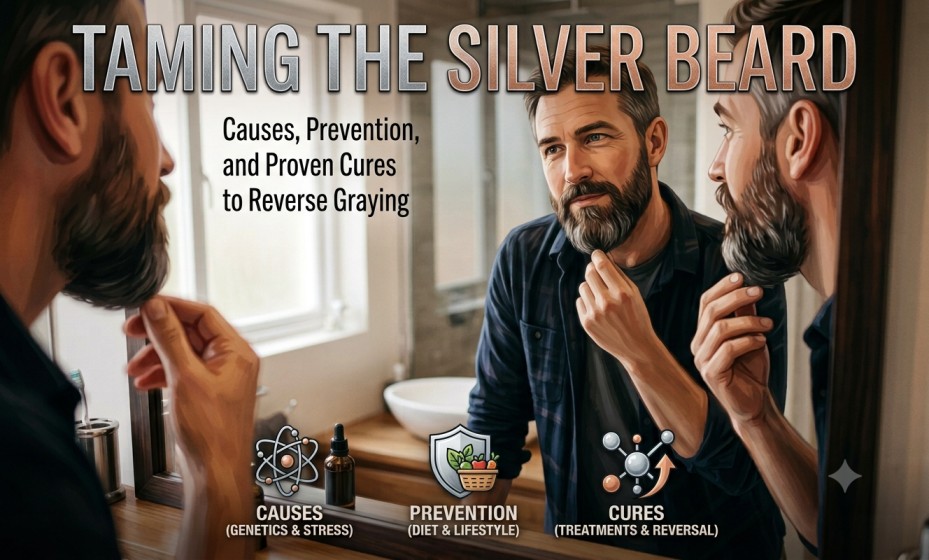
Noticing the first few silver, white, or coarse grey hairs in your beard can be a pivotal moment. For many men entering their 30s, discovering grey facial hair comes as a surprise—often appearing long before any silver strands show up on the scalp.
Whether you view it as the beginning of a distinguished "distinction" or an unwanted reminder of aging, understanding why your beard turns grey—and what you can do about it—puts you back in control.
Hair color is produced by specialized cells called melanocytes, which produce pigment (melanin) inside your hair follicles. Over time, melanin production slows down or stops altogether, resulting in clear or translucent hair shafts that appear white or grey.
Genetics: The primary determinant of when and how fast your beard greys is your DNA. If your father or grandfather developed a salt-and-pepper beard in their early 30s, you are likely genetically predisposed to follow the same timeline.
Oxidative Stress and Free Radicals: As cells metabolize energy, they produce reactive oxygen species (ROS). Over time, hydrogen peroxide can accumulate in the hair follicle, essentially bleaching the hair from the inside out.
Chronic Stress: High levels of stress trigger the fight-or-flight response, releasing norepinephrine. Studies suggest norepinephrine can deplete the stem cells responsible for regenerating melanocytes in hair follicles.
Nutritional Deficiencies: Lack of key nutrients—particularly Vitamin B12, Vitamin D3, Iron, Copper, and Zinc—can interfere with melanin production and accelerate premature greying.
Lifestyle Factors (Smoking & Poor Sleep): Smoking restricts blood flow to micro-vessels in the skin and introduces heavy oxidative stress, both of which damage melanocytes. Chronic sleep deprivation similarly impairs cellular repair.
Underlying Health Conditions: Autoimmune conditions like vitiligo or alopecia areata, as well as thyroid dysfunctions (hypothyroidism or hyperthyroidism), can lead to sudden greying or patchy white hair in the beard.
While you cannot rewrite your genetics, you can delay premature greying caused by environmental and lifestyle stress.
Optimize Your Nutrition:
B-Vitamins: Ensure adequate intake of B12, B6, and Folic Acid (found in eggs, meat, dairy, leafy greens, and fortified cereals).
Trace Minerals: Copper plays a direct role in melanin synthesis. Include sesame seeds, cashews, lentils, and dark chocolate in your diet.
Antioxidants: Eat foods rich in vitamins C and E, such as berries, nuts, and citrus fruits, to neutralize free radicals.
Manage Stress Effectively:
Incorporate daily stress-reduction practices like regular cardiovascular exercise, resistance training, meditation, or consistent breathwork.
Quit Smoking:
Stopping smoking reduces systemic oxidative stress and restores healthy blood flow to hair follicles.
Protect Against UV Exposure:
Excessive ultraviolet (UV) radiation damages both skin and hair follicles. Using a lightweight facial moisturizer with broad-spectrum SPF or a UV-protective beard oil helps shield hair roots.
The possibility of reversing grey beard hair depends largely on the underlying cause.
Genetically Driven Greying: Currently, natural reversal of genetically programmed greying is not medically possible once melanocyte stem cells are fully depleted.
Nutritional or Stress-Induced Greying: If greying is caused by a vitamin deficiency (e.g., Vitamin B12 deficiency) or temporary severe stress, correcting the deficiency or lifestyle factor can sometimes restore natural pigmentation to newly growing hair.
Targeted Supplementation: If blood tests reveal low levels of Vitamin B12, Vitamin D, or Copper, targeted supplementation under medical guidance can support follicular health.
Peptide-Based Topical Serums: Emerging dermatological treatments use biomimetic peptides designed to stimulate melanogenesis (pigment production) in active follicles.
Red Light Therapy (Photobiomodulation): Low-level laser therapy (LLLT) is being explored for its ability to enhance cellular energy (ATP production) and reduce follicular inflammation.
Beard Dyes & Pigment Restorers:
Temporary Dyes & Mascaras: Quick fixes for touch-ups.
Semi-Permanent / Permanent Beard Dyes: Formulated specifically for coarse facial hair. Look for ammonia-free options to prevent skin irritation.
Gradual Color-Depositing Washes: Shampoos designed to gradually darken grey hairs over multiple washes for a natural transition.
Embrace the Salt-and-Pepper Look:
A well-maintained, neatly trimmed grey or salt-and-pepper beard projects confidence, maturity, and sophistication. Using hydrating beard oils, leave-in conditioners, and dedicated beard balms keeps grey hairs smooth and soft rather than coarse and wire-like.