Breaking News




Popular News





Enter your email address below and subscribe to our newsletter
 By aman badyal
The web development industry is continuously changing as businesses demand faster, more scalable, and user-friendly applications. Among the many technologies used for modern web development, the MERN Stack has become a popular choice for building dynamic and full-stack web applications.
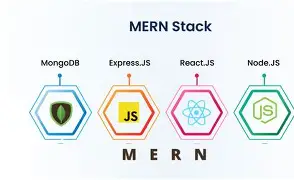
MERN stands for MongoDB, Express.js, React, and Node.js. One of its biggest advantages is that developers can use JavaScript across both the frontend and backend. This makes development more consistent and allows developers to build complete applications using a single primary programming language.
As web applications become more advanced, the future of MERN Stack development is expected to focus on performance, scalability, cloud technologies, artificial intelligence, real-time applications, and better developer productivity.
The demand for developers who can work on both frontend and backend systems continues to increase. MERN provides developers with the tools needed to create complete applications, from user interfaces to APIs and databases.
A MERN developer can work with:
React for frontend development
Node.js and Express.js for backend development
MongoDB for database management
REST APIs and other API architectures
Authentication and authorization
Cloud deployment and hosting
Real-time communication
Because of this broad skill set, MERN development can be useful for startups, software companies, SaaS products, e-commerce platforms, educational platforms, and enterprise applications.
React has become an important part of modern web development. Its component-based architecture allows developers to create reusable and maintainable user interfaces.
The future of React development is likely to involve greater use of:
Server-side rendering
Server components
Streaming interfaces
Improved application performance
Modern routing and data-fetching approaches
Reusable component systems
Developers will increasingly need to understand not only React components and hooks, but also application architecture, rendering strategies, performance optimization, and state management.
Node.js allows JavaScript to run outside the browser, making it possible to build backend services with JavaScript.
Its event-driven architecture makes Node.js suitable for applications that handle many simultaneous connections, APIs, real-time communication, and data-driven services.
Future MERN developers will need to go beyond basic Express routes and learn concepts such as:
REST API design
Authentication and authorization
WebSockets
Microservices
Background jobs
Caching
API security
Database optimization
Performance monitoring
This shift means that backend knowledge will become increasingly important for developers who want to progress from junior to advanced full-stack roles.
Modern applications are increasingly deployed on cloud platforms rather than traditional servers.
MERN developers are therefore likely to work more frequently with cloud services such as:
AWS
Microsoft Azure
Google Cloud
Cloudflare
Vercel
Docker-based environments
A developer who understands how to build an application but does not understand deployment, environment variables, logging, security, scaling, and monitoring may have difficulty managing production systems.
Therefore, cloud and DevOps knowledge will become an important complementary skill for MERN developers.
Artificial intelligence is becoming an important part of software development. MERN applications can integrate AI services through APIs and backend services.
For example, a MERN application could include:
AI chat assistants
Recommendation systems
Document summarization
Automated content generation
Intelligent search
Customer-support systems
Code-generation tools
Personalized learning systems
Node.js can act as the backend layer that communicates with AI services, while React can provide the interface through which users interact with those systems.
As a result, future MERN developers may increasingly need basic knowledge of AI APIs, prompt engineering, vector databases, embeddings, and AI application architecture.
Real-time functionality is becoming common in modern applications.
Examples include:
Chat applications
Live notifications
Collaboration tools
Online classrooms
Tracking systems
Live dashboards
Multiplayer applications
Node.js can support real-time communication using technologies such as WebSockets. React can then update the user interface as new information arrives.
This makes the MERN ecosystem suitable for many real-time application scenarios.
MongoDB is a popular NoSQL database used with MERN applications. Its document-based structure works naturally with JavaScript objects and JSON-like data.
However, future MERN developers should not limit themselves to basic CRUD operations.
They should understand:
Database indexing
Aggregation
Schema design
Query optimization
Transactions
Data validation
Replication
Backup strategies
Database security
Developers may also work with other databases alongside MongoDB depending on the application's requirements. Knowledge of SQL databases such as PostgreSQL can therefore be a valuable additional skill.
Small applications can often be developed as a single application. As applications grow, however, organizations may divide functionality into multiple services.
For example, an e-commerce platform could have separate services for:
Authentication
Users
Products
Orders
Payments
Notifications
Node.js can be used to build these services, while React can communicate with them through APIs.
MERN developers who understand monolithic architecture, modular architecture, and microservices will be better prepared to work on larger systems.
As web applications handle more sensitive information, security will remain a major concern.
Future MERN developers should understand:
JWT and session-based authentication
Password hashing
Role-based access control
Input validation
API security
CORS
Rate limiting
Secure cookies
Protection against XSS
Protection against injection attacks
Secure file uploads
Security should be considered during application design rather than added only after development is complete.
AI tools are changing how developers write and maintain software. Developers can use AI-assisted tools to help generate code, explain errors, create tests, document APIs, and explore implementation approaches.
However, AI does not eliminate the need for programming knowledge.
Developers still need to understand:
Why the generated code works
Whether the solution is secure
Whether it is efficient
How it fits into the existing architecture
How to test and maintain it
The future developer is therefore likely to use AI as a productivity tool while still relying on strong programming and system-design fundamentals.
In the early stages of learning MERN, developers usually focus on creating pages, APIs, forms, and CRUD applications.
As their experience grows, the focus shifts toward architecture.
Advanced MERN developers will need to think about:
Frontend → API Layer → Business Logic → Database → Cache → External Services → Cloud Infrastructure
They will also need to consider scalability, reliability, security, observability, and maintainability.
This means that learning MERN in the future should not be limited to learning four technologies. Developers should learn how these technologies work together to build production-ready systems.
MERN remains a useful technology stack for developers who want to build modern full-stack JavaScript applications.
However, learning only the basic MERN stack is unlikely to be enough for an advanced development career.
A future-ready MERN developer should consider learning:
HTML and CSS
JavaScript fundamentals
Advanced JavaScript
React
Node.js
Express.js
MongoDB
REST APIs
Authentication and security
Git and GitHub
Testing
TypeScript
Docker
Cloud platforms
CI/CD
System design
AI API integration
Performance optimization
The future of MERN Stack development is not simply about using MongoDB, Express.js, React, and Node.js. It is about using these technologies as part of a broader modern software-development ecosystem.
Developers who combine MERN knowledge with TypeScript, cloud computing, DevOps, security, AI integration, testing, system design, and performance optimization can build applications that are more scalable and production-ready.
MERN provides a strong foundation for full-stack JavaScript development, but continuous learning will be essential. The developers who understand both the technologies and the architecture behind modern applications will be better prepared for the changing demands of web development.